Data-driven rehabilitation
We apply data-driven rehabilitation strategies such as force plate, dynamometer testing and BFR training to measure strength, balance and movement, supporting a safe, confident return to activity.
Types of data-driven rehabilitation in physiotherapy
Force Plate Assessment
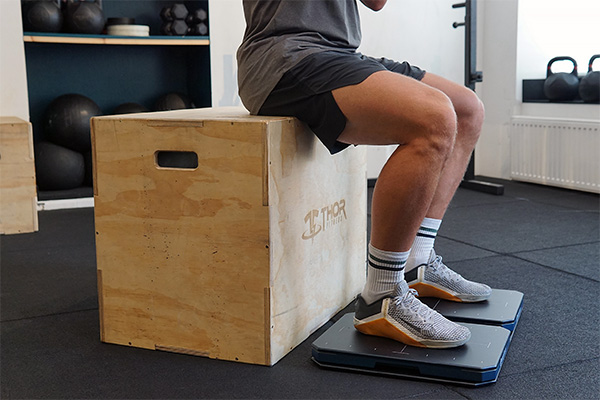
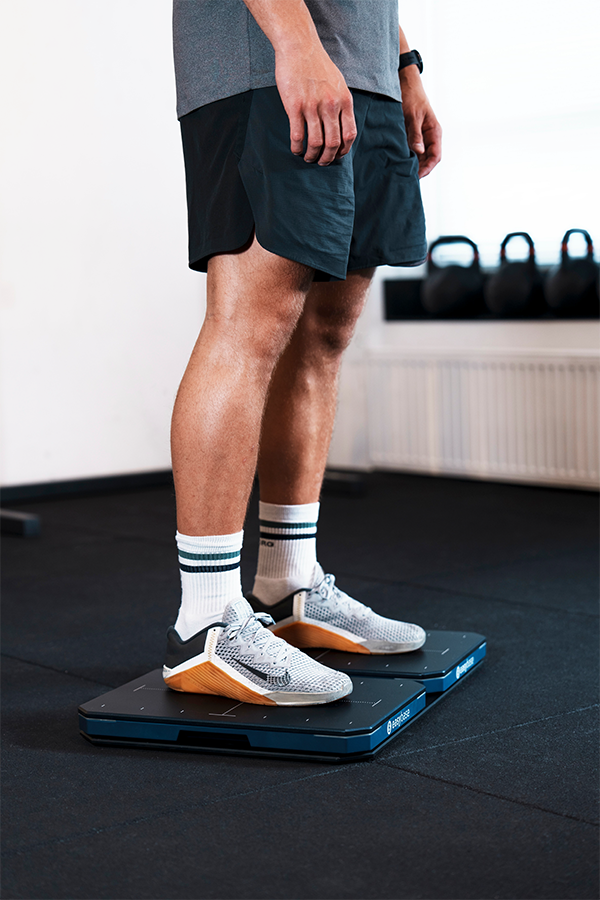
At W6 Physiotherapy, we use advanced Force Plate technology by Gait & Motion to provide objective assessment of balance, strength, weight-bearing and movement control.
Force plates measure how much force you produce through the ground during movements such as standing, squatting, stepping, hopping or jumping. This helps identify asymmetries, compensations and movement deficits that may not always be visible during a standard clinical assessment.
Why Is Force Plate Testing Useful?
After injury, surgery or periods of reduced activity, the body often compensates without you realising. Even when pain has improved, deficits in loading, control or stability may still remain.
Force Plate assessment can help us:
- Assess weight distribution between limbs
- Measure balance and postural stability
- Analyse movement control and landing mechanics
- Monitor rehabilitation progress over time
- Support return-to-function and return-to-sport decisions
- Identify deficits relevant to falls prevention and performance
This provides objective data to guide rehabilitation safely and effectively.
Who Can Benefit?
Force Plate testing may be useful for:
- ACL and lower limb rehabilitation
- Post-operative recovery (knee, hip, ankle)
- Tendon rehabilitation
- Running and gait assessment
- Balance and falls-risk assessment
- Strength and performance testing
- Return-to-sport or return-to-function decision making
What to Expect
During your session, we will discuss your injury history, symptoms and goals. You will then perform a series of movements appropriate to your rehabilitation stage, which may include balance tasks, squats, step tasks, single-leg exercises or jump testing.
We explain the findings clearly and use the data to help guide treatment progression or assess readiness for higher level activity.
Where appropriate, reports can also be shared with consultants or insurers.
Goal driven therapy
We complete comprehensive assessments and collect information on injury onset, cause, and area of symptoms, as well as your general health and level of activity. This information helps us create a clear clinical picture of you and your injury.
We also discuss and note your goals, which may include a pain-free walk with your dog or running a marathon.
Once we have assessed you, we can agree on how we can help achieve your goals and set a realistic time frame.
This helps to avoid premature activity progression and re-injury, and it also allows you to plan and have confidence in your care.
We do not guess!
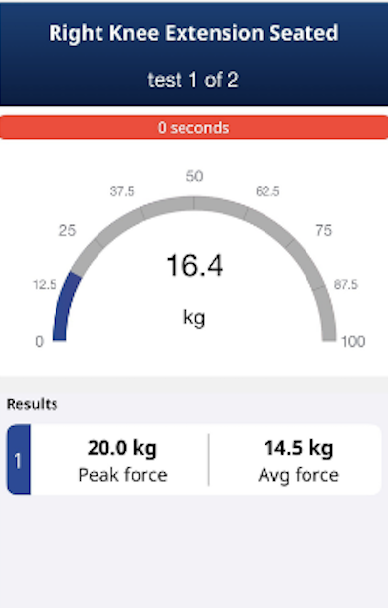
As part of Musculoskeletal assessment, we complete dynamometry testing.
What is a Handheld Dynamometer (HHD)?
HHD is an electronic device used to measure muscle strength. It requires one to exert a maximum isometric force against the device, which is usually held stationary by a therapist or stabilized with a belt or strap.
This assessment method allows for accurately evaluating strength and detecting deficits that could contribute to pain or injury.
Historically, manual muscle testing was used to assess strength, but this method has been proven to be considerably less reliable than HHD.
Should we detect a strength deficit following an assessment, it may be one of the therapy goals. Strength change can be monitored during subsequent therapy sessions.
Blood Flow Restriction (BFR) Training
At W6 Physiotherapy, we use Blood Flow Restriction (BFR) Training to support rehabilitation and strength development following injury or surgery.
BFR involves applying a specialised cuff to the arm or leg whilst performing low-load exercises. This allows the muscles to work harder whilst reducing the amount of stress placed on joints, tendons and healing tissues.
Why Is BFR Useful?
Following injury or surgery, weakness and muscle loss can develop quickly. However, heavy strength training is not always appropriate during the early stages of rehabilitation.
Blood Flow Restriction Training allows individuals to gain many of the benefits of strength training using lighter loads. This can help maintain muscle mass, improve strength and support recovery whilst protecting healing tissues.
BFR can help:
- Improve muscle strength
- Reduce muscle loss following injury or surgery
- Support rehabilitation when heavy loading is not yet appropriate
- Assist recovery following ligament, tendon and joint injuries
- Progress rehabilitation safely and effectively
Who Can Benefit?
Blood Flow Restriction Training may be useful for:
- ACL and lower limb rehabilitation
- Post-operative recovery (once wounds and incisions have healed)
- Tendon rehabilitation
- Joint injuries and periods of reduced activity
- Muscle weakness following injury or immobilisation
- Return-to-sport rehabilitation
What to Expect
During your assessment, we will discuss your injury, symptoms and goals to determine whether BFR is appropriate for your rehabilitation.
A specialised cuff is applied to the arm or leg and adjusted to an individualised pressure before completing a series of exercises using light resistance.
Your physiotherapist will monitor your response throughout the session and use BFR as part of a personalised rehabilitation programme designed to help you return to your goals safely and effectively.